
“I Felt Better, Got Busy, and Forgot That Feeling Good Was the Point”
It happens more often than you think. Avoiding pain management can lead to chronic issues.
Someone comes in because their neck is stiff, their back is flaring up, headaches are becoming more frequent, or movement just feels harder than it should. After a visit or two, things improve. Life gets busy again. Work, family, travel, routines.
Weeks turn into months.
Then one day, the discomfort quietly returns — often gradually enough that people adapt to it before they fully notice how much it’s affecting them again. North Vancouver residents are active! Common activities on the North Shore and nearby areas:
- Pickleball
- Gardening
- Skiing
- Snowboarding
- Boating
- Mountain Biking
- Seawall Runs & Walks
- Road Biking
- Playing with Kids
- Golfing
- Kayaking
- Working
Keeping moving is hand in hand with our lifestyle. So is sitting and working at desk all day. And sometimes that work-play lifestyle needs a bit of help! That help does not need to be urgent or responsive to injury or pain. Often, staying ahead of pain is the better plan.
At Marine Drive Chiropractic, we hear this all the time:
“I know… I should have come in sooner.”
And honestly? Most people don’t mean to neglect their health. Feeling better simply makes it easier to move on with life.
But that raises an important question:
What if feeling good wasn’t supposed to be temporary?
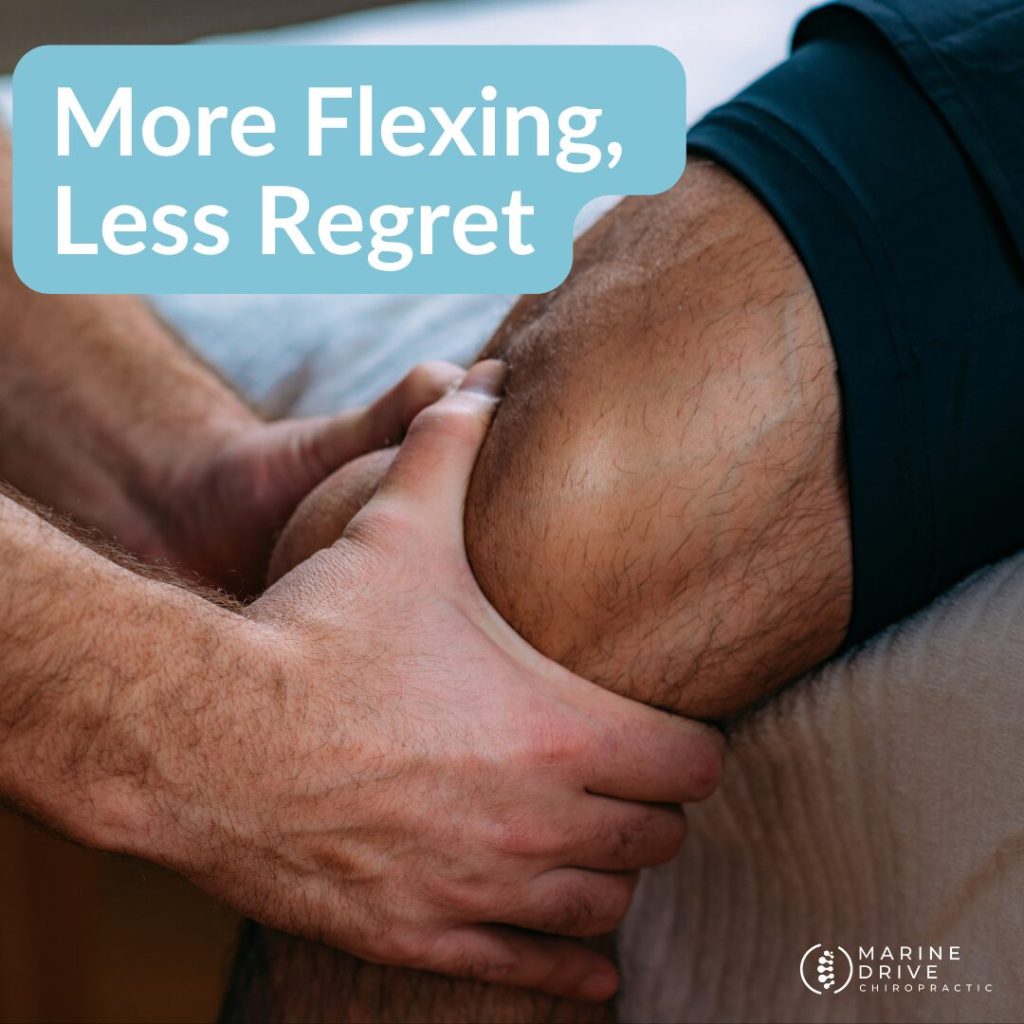
Chiropractic Care Is About More Than Pain Relief
Many people first explore chiropractic care because something hurts. That’s understandable. Pain gets our attention.
But for many ongoing chiropractic patients, care eventually becomes less about reacting to pain and more about maintaining mobility, movement, and quality of life over time.
The Canadian Chiropractic Association notes that musculoskeletal conditions — including back pain, neck pain, and joint dysfunction — affect millions of Canadians every year. In fact:
- More than 11 million Canadians experience injury or issues causing movement each year.
- Almost one-third of Canadians report limitations in their daily activities because of back pain.
- One in eight Canadians report chronic back pain.
- One in five Canadian adults experiences chronic pain.
Pain is common. Limited movement is common. Adapting to discomfort is common too.
What’s less common is staying ahead of it. Often, pain is avoidable.
Mobility Matters More Than Most People Realize
As we age, mobility becomes increasingly connected to independence, activity levels, balance, sleep quality, and overall wellbeing.
The Canadian Chiropractic Association highlights that preserving mobility and physical function plays an important role in healthy aging and maintaining quality of life.
That doesn’t mean people need constant treatment or pressure-filled care plans. At Marine Drive Chiropractic, that’s never been the philosophy.
But it does mean many people benefit from paying attention to their bodies before discomfort becomes severe again.
Sometimes that looks like occasional maintenance visits.
Sometimes it means addressing recurring patterns early.
Sometimes it simply means not waiting until movement becomes difficult again.
Pain Prevention Is Different Than Pain Management
One of the biggest misconceptions about chiropractic care is that you should only come in when something is “bad enough.”
But many patients eventually realize there’s a difference between:
- managing pain once it becomes disruptive, and
- supporting mobility and function consistently over time.
You service your car before it breaks down completely. You don’t wait until you can barely walk to think about movement health either.
That doesn’t mean perfection.
It means awareness.
A Thoughtful Approach to Care
Dr. Leering’s approach has always been straightforward:
no pressure, no unnecessary packages, no sales tactics.
Just evidence-informed care, honest conversations, and helping people move better and feel better when possible.
For some patients, that may mean short-term relief.
For others, it becomes part of a broader commitment to staying active, mobile, and proactive about their health.
Either way, the goal is simple:
helping people get back to living their lives more comfortably.
And sometimes, helping them remember that feeling good was the point all along.